
For a long time, video collaboration was a technical problem. Connecting a Cisco room to Microsoft Teams, getting a Poly endpoint to work with Zoom, handling a bit of SIP...nothing insurmountable.
CVI solutions went a long way toward simplifying all of that, and for most organizations, the problem seemed solved.
But that model rests on an implicit assumption: that everyone operates inside the same Teams. That assumption is disappearing.
In the United States, this is already a live issue. Microsoft Teams is not a single environment; it is a constellation of isolated clouds, each designed to remain separate, sometimes by strict regulatory mandate.
One reality becomes clear very quickly: being "on Teams" does not guarantee the ability to collaborate with another user who is also "on Teams". That is precisely where traditional interoperability models begin to show their limits.
Microsoft validated CVI solutions were designed to solve a specific problem: connecting standard video endpoints to Microsoft Teams. They do that very well. But their architecture depends on deep integration with the Microsoft environment in which they are deployed.
In other words, CVI is bound to a perimeter. As long as everyone operates within that perimeter, everything works. The moment a sovereignty, security, or compliance boundary is introduced, the model starts to crack. It does not break outright; it simply becomes irrelevant.
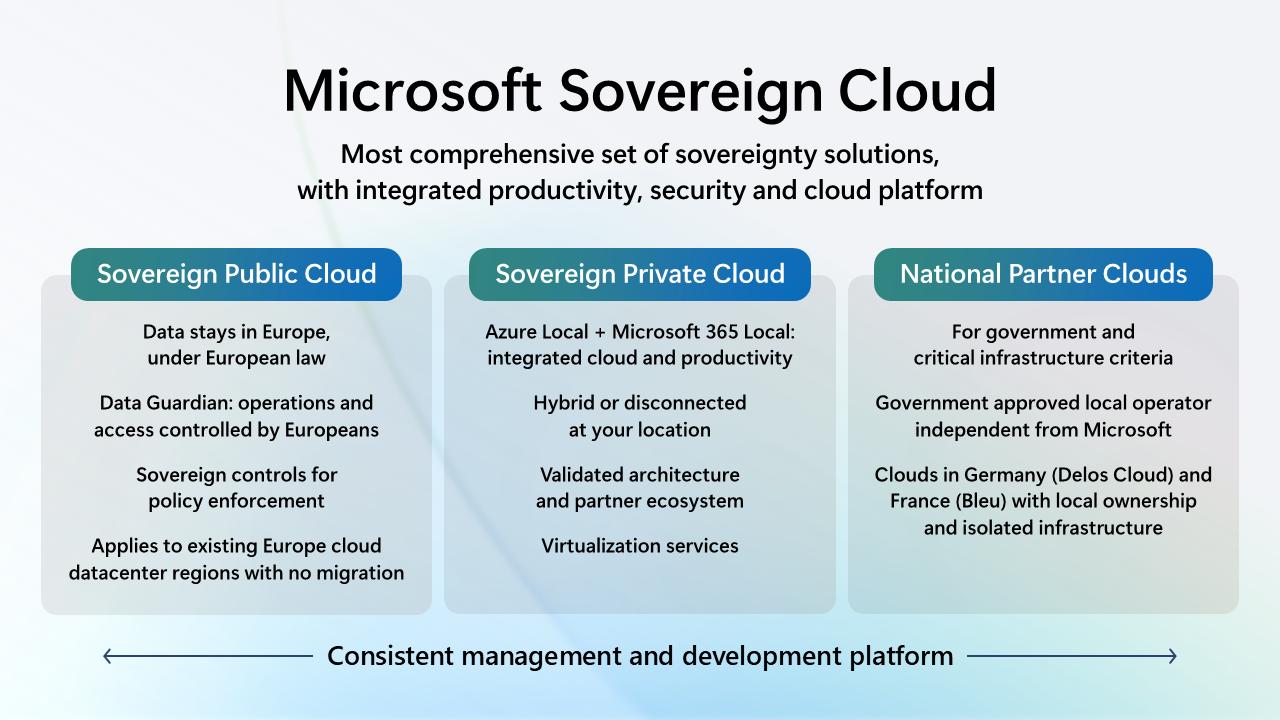
With initiatives like Bleu in France and Delos Cloud in Germany, Europe is following a trajectory similar tothat of the United States, with its own regulatory constraints layered on top.
These environments introduce a hard break: data isolation, strict flow controls, and a deliberate separation from the public cloud. Everything is designed to prevent interconnection. That choice is coherent from a security standpoint; but it fundamentally changes the nature of the problem.
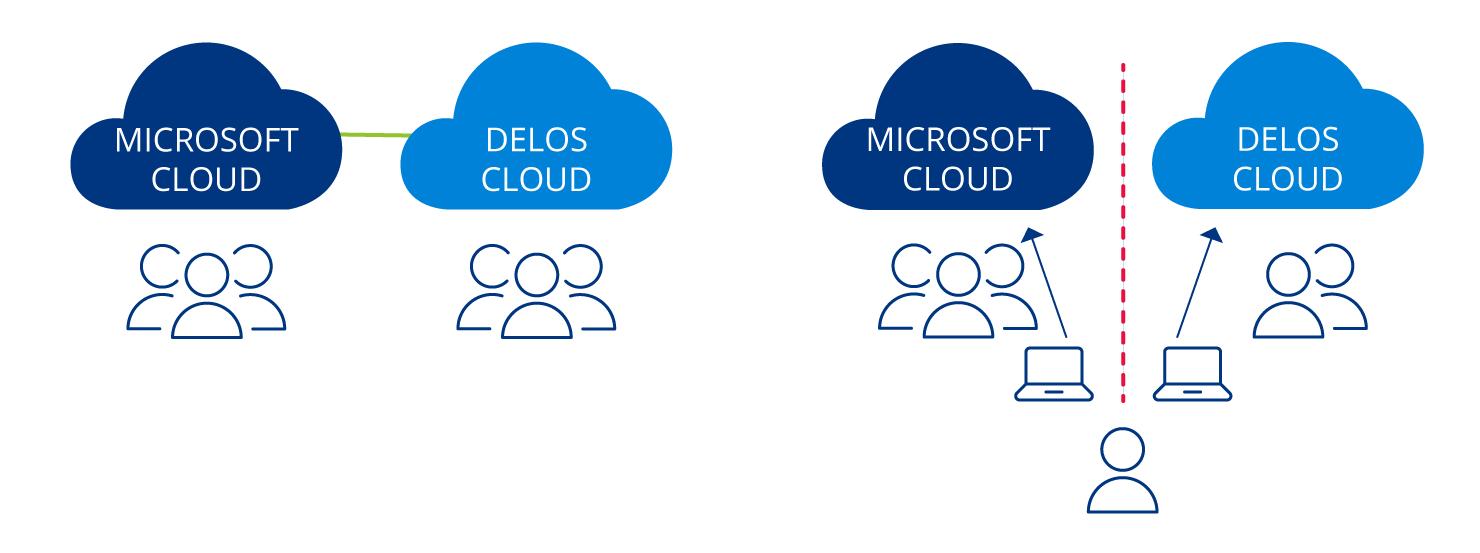
Historically, interoperability meant translating protocols. Today the problem is different. The question is no longer "which protocol to use" but "which path is actually permitted".
In a world where a government ministry runs on a sovereign cloud, a partner runs on public Teams, and a supplier uses Zoom, CVI works perfectly as long as everyone plays within the same perimeter. The moment a sovereignty boundary is introduced, CVI does not fail; it simply stops being relevant.
Synergy SKY takes a fundamentally different approach. Rather than attempting to integrate infrastructures with each other, the solution relies on a simpler and more resilient mechanism: the native Microsoft Teams connection model.
Rather than connecting infrastructures, which sovereign environments are explicitly designed to prevent, this approach uses the only permitted path: that of the participant.It does not work around security; it operates entirely within the model that Microsoft itself designed and secured.
In environments like GCC High,DoD, and soon Bleu or Delos, the rules are straight forward: infrastructure connections between environments are not allowed; but participants can, within a controlled framework, join a meeting.
That is exactly where this approach becomes relevant. It already enables organizations in the US to join meetings across isolated environments and share content, without any CVI in the chain.
This is not a theoreticaldiscussion. With the rollout of Bleu and other sovereign Teams environments inEurope, three dynamics will play out simultaneously.
• Environments will fragment.
• Security constraints will tighten.
• Cross-organisation use cases will multiply
Approaches built purely oninfrastructure integration will not be enough. Getting ahead of this now means avoiding operational pressure, protecting the user experience, and not havingto deploy under urgency solutions that end up weakening the very security rules they were meant to support.
For years, interoperability meant making systems talk to each other. Going forward, it means enabling collaboration between environments that were deliberately built to stay apart. That is not a technical evolution; it is a shift in paradigm.
CVI connects infrastructures. Approaches like Synergy SKY connect meetings.
As sovereign Teams environments arrive in Europe over the coming months, many organisations will encounter a problem they did not anticipate. And as usual, it will be IT teams left managing the urgency. The time to think about this is now.
Facing this challenge in your organisation? Get in touch Our engineers can walk you through what sovereign Teams environments mean for your setup